
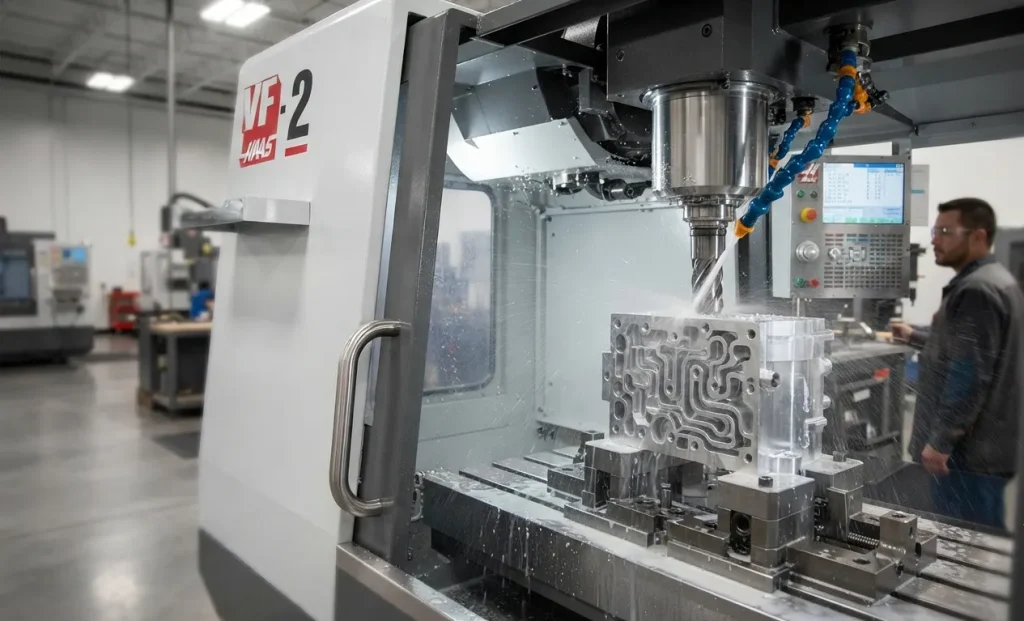
Source replacement industrial components with subcontract CNC machining in Melbourne—send us your drawings and specifications for review.
When a worn component interrupts production, the replacement must fit the existing assembly and perform as intended. Our team reviews the available drawing, sample, material requirements, and quantity before confirming whether the work suits our general engineering services. This gives maintenance and procurement teams a clearer path to quotation without unsupported promises about tolerances or materials.
What does subcontract CNC machining cover?
Subcontract CNC machining means an external engineering workshop manufactures components to an agreed scope for another business. The scope may involve a one-off replacement, prototype or repeat batch, depending on the drawing, material, geometry and inspection requirements. We do not assume that every part can be reproduced from a photograph or damaged sample; we first establish what information is available and what must be confirmed.
Information We Need Before Quoting
A useful enquiry reduces avoidable clarification and allows us to assess machining requirements accurately. Send the current drawing where available and identify the equipment or assembly in which the component operates.
- Drawing and revision: Provide the latest drawing, CAD file or marked-up sketch, including the applicable revision.
- Material specification: Nominate the required material or provide records from the original component instead of relying on appearance.
- Critical dimensions: Identify fits, threads, sealing faces and other dimensions that affect assembly or operation.
- Quantity and timing: State whether you require one replacement, a prototype batch or recurring production quantities.
- Inspection expectations: List any reports, checks or customer-specific records that must form part of the quoted scope.
Planning Replacement Parts Responsibly
Replacement-part work should be coordinated with the person responsible for the machine and its safety. The Safe Work Australia plant risk guidance explains that changes, maintenance and repair must be managed within the broader risks of workplace plant. Machining a component does not replace engineering approval, commissioning or validation where those steps are required.
Our previous article on mechanical design and drafting in manufacturing explains why usable design information matters before production. We use that same practical approach when reviewing subcontract work: confirm the part, clarify the scope and quote only the capability required.
How We Assess Manufacturability
Our review considers whether the available information is sufficient to manufacture the requested component and whether the geometry suits our workshop. We may ask for clarification about datums, fits, threads, surface requirements or the condition of an existing sample. If design responsibility remains with the client or another engineer, that responsibility should be documented rather than transferred by assumption.
Lead time also depends on material availability, tooling, inspection requirements and current workshop capacity. We therefore provide project-specific quotations instead of promising universal turnaround times. Supplying complete information at the beginning gives us the best opportunity to identify questions before material is ordered or machining begins.
Request a Machining Assessment
Reds Engineering supports Melbourne businesses with machining, fabrication, maintenance and general engineering work. Contact us with your drawings, sample details, required quantity and deadline. We will assess the request, identify missing information and advise whether we can quote the component.