
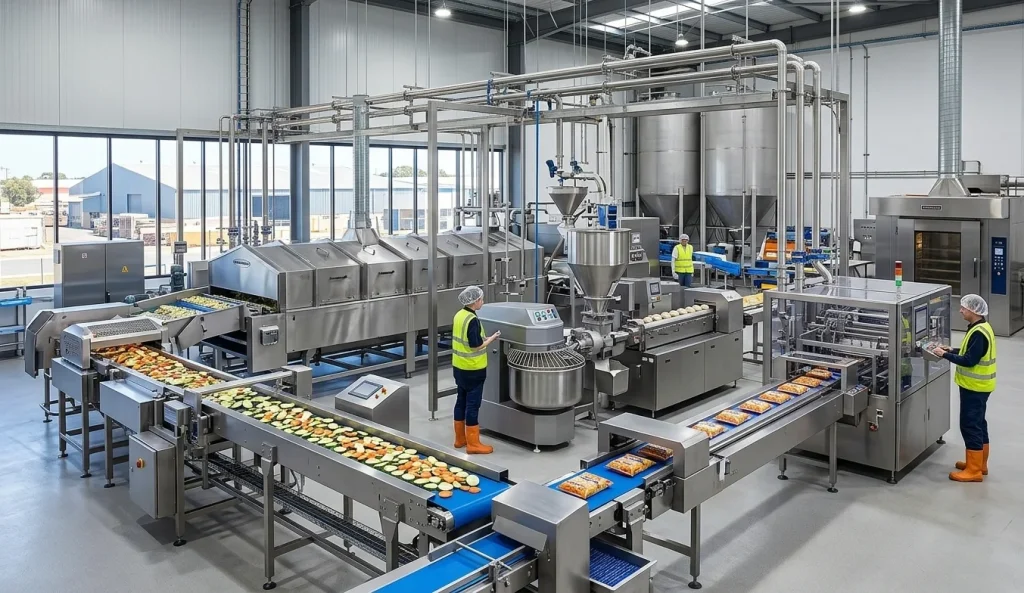
Reduce downtime with food plant machinery maintenance from Reds Engineering in Melbourne, covering practical mechanical care for processing equipment.
Processing equipment faults can interrupt output, delay orders and place added pressure on internal maintenance teams. Food plant machinery maintenance in Melbourne can address worn components, poor alignment and recurring mechanical failures before they affect more of the production line. The connection between mechanical design and general engineering in food manufacturing also becomes relevant when damaged or obsolete parts require further technical assessment.
Food Plant Machinery Maintenance: Faults That Require Inspection
- Grinding, knocking or rattling during normal machinery operation.
- Excessive vibration through machine frames, mounts or connected assemblies.
- Repeated stoppages that return after the equipment has been reset.
- Irregular conveyor travel or inconsistent product movement.
- Cracks, deformation or visible wear across mechanical components.
- Changes in machinery speed, alignment or operating stability.
These signs do not confirm that one specific component has failed. Wear, looseness, poor alignment, unstable mounts and damage within connected assemblies can produce similar symptoms. Through our general engineering services at Reds Engineering, we assess the machinery’s operating condition before recommending repair, machining or replacement work.
What Should Be Checked Beyond the Failed Component?
A damaged component may be the visible result of a wider mechanical problem. Poor alignment, unstable mounting, uneven loading or wear in a connected assembly can contribute to repeated failure. Replacing the affected part without checking these conditions may leave the original cause unresolved.
We assess the failed component alongside its mounting points, adjoining parts and operating movement. The findings determine whether repair, machining or replacement work may be suitable within our capabilities. Our precision machinery fabrication capabilities may be relevant where worn supports, mounts or mechanical components require site-specific work.
How Should Mechanical Work Fit Around Production?
Food plant machinery maintenance requires coordination between production personnel and the mechanical trades entering the facility. Clear fault information can also prevent avoidable delays after the equipment has been taken out of service.
Machinery must be isolated before workers access hazardous moving parts or stored energy sources. WorkSafe Victoria’s safe isolation of machinery checklist covers shutdown, energy isolation, lockout, testing and controlled reactivation. Site management remains responsible for applying suitable safety procedures to the plant and workplace.
Maintenance findings may indicate that a component needs repair, machining or replacement. Existing dimensions, operating loads and surrounding assemblies should be considered before further work begins. Any proposed change must also avoid creating new mechanical, hygiene or safety concerns.
Coordinate Machinery Maintenance in Melbourne
Record the machinery model, reported fault, recent repairs and operating conditions before arranging an assessment. Include the preferred shutdown window and any site-access or hygiene requirements that may affect the work.
For food plant machinery maintenance in Melbourne, we at Reds Engineering can assess mechanical faults and determine whether general fitting, repair, machining or component replacement falls within our capabilities.
The recommended scope will depend on the equipment’s condition and the findings from the inspection.
Contact us with the equipment details and preferred maintenance schedule.