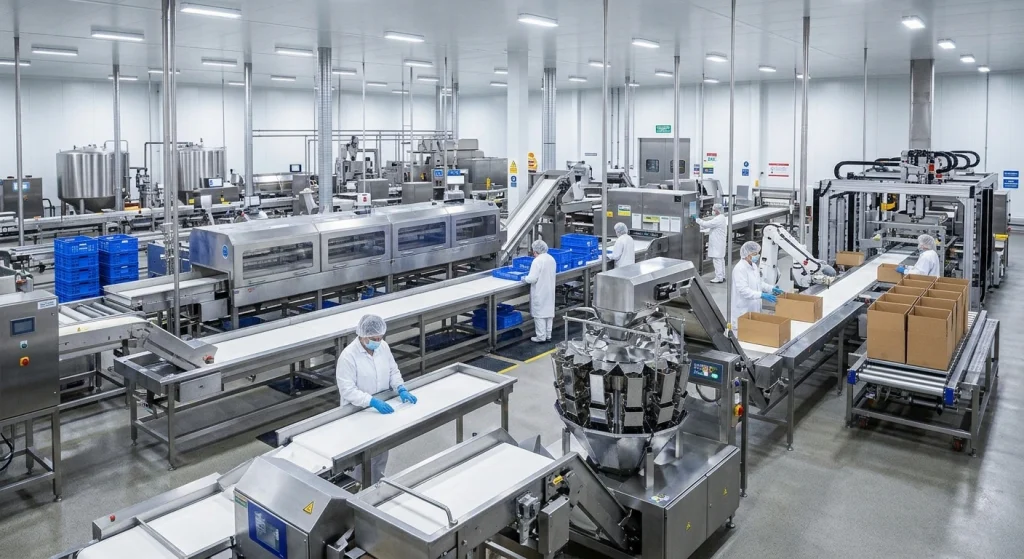
Plan production line commissioning with Reds Engineering in Melbourne to identify mechanical issues before start-up and support a controlled handover.
A line can appear ready while still carrying alignment faults, loose fittings, access restrictions or incomplete safeguards. The production line commissioning scope should therefore define the equipment, acceptance criteria, test sequence and responsibilities before routine production begins.
What Should Production Line Commissioning Confirm?
Production line commissioning confirms that installed machinery has been inspected, tested and recorded against approved drawings, manufacturer instructions and site requirements. It should expose defects before full-load operation, not provide a blanket guarantee that every future fault has been removed.
Reds Engineering lists machinery assembly, installation, maintenance, repair and new-line commissioning within the general engineering capability. Our fitters and turners can contribute to an agreed mechanical scope, while electrical, hydraulic, pneumatic, and control-system work must remain with suitably qualified personnel.
How Should Testing Progress Before Start-Up?
Testing should move from static inspection to controlled functional checks and, where authorised, staged operating trials. The sequence should reflect the equipment design, operating limits, isolation procedures and the responsibilities assigned to the owner, OEM and each contractor.
A practical pre-start review should cover:
- Position and alignment: Check machine levels, shafts, couplings, conveyors and transfer points against approved dimensions.
- Fasteners and supports: Inspect accessible bolts, brackets, frames and fabricated supports for correct installation and visible defects.
- Guards and access: Confirm approved guarding is fitted and routine service points remain accessible.
- Services and interfaces: Record checks completed by the responsible mechanical, electrical, pneumatic and hydraulic trades.
- Test evidence: Capture results, defects, adjustments, approvals and outstanding actions before handover.
How Should Defects Be Managed?
Unexpected vibration, poor product transfer, inconsistent movement or clearance problems require investigation against the agreed acceptance criteria. Production line commissioning may lead to realignment, fitting adjustments, replacement parts or modified brackets, but any correction must stay within the authorised project scope.
WorkSafe Victoria’s Plant compliance code provides practical direction on Victorian duties involving machinery and equipment across the plant lifecycle. Commissioning records should identify tested functions, observed defects and completed actions rather than relying on an invoice or verbal sign-off alone.
Commissioning often overlaps with production-line installation planning and precision machinery fabrication for production bottlenecks where testing identifies fit, alignment, frame or bracket issues. Connecting these workstreams gives manufacturers a clearer route from a documented defect to an approved mechanical correction without treating every problem as a full-line redesign.
Prepare for Start-Up in Melbourne
A controlled handover records completed checks, approved corrections and unresolved limitations. Reds Engineering’s workshop capabilities cover machinery assembly, installation, maintenance and repair within an agreed scope. Production line commissioning needs accurate drawings, equipment details, clear responsibilities, test requirements and acceptance criteria.
Send the equipment list, current drawings, OEM information, acceptance criteria, fault history, site access constraints and proposed start-up date through the Reds Engineering contact page. We can review the requested mechanical commissioning scope, identify information still needed and discuss whether workshop preparation or on-site attendance is appropriate.