
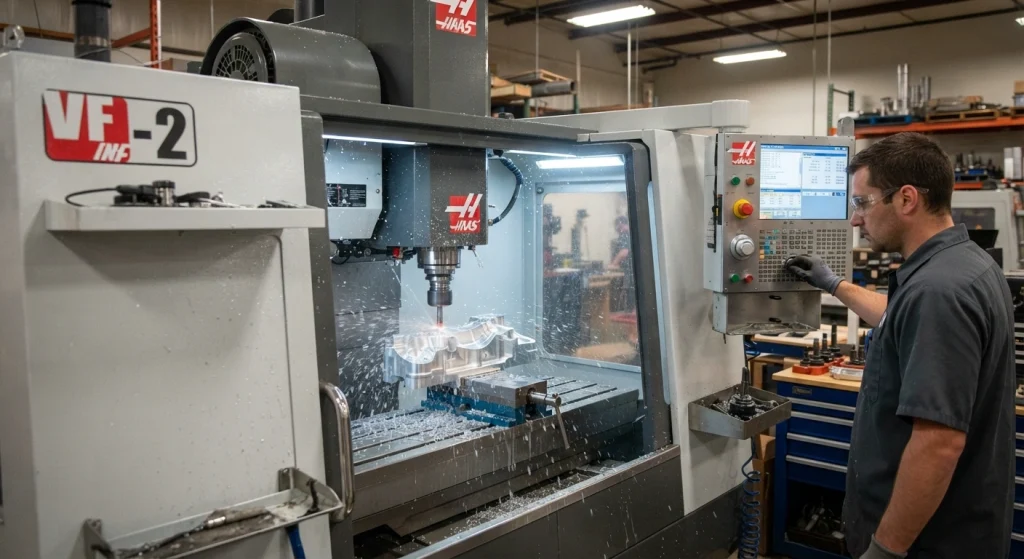
Reds Engineering delivers production run milling in Melbourne for repeat industrial components, supporting consistent dimensions across repeat orders.
For manufacturers ordering the same machined part across repeated batches, production run milling can keep the machining process aligned with an approved drawing, material and quantity. At Reds Engineering, we apply our milling and general machining capability to industrial component requirements in Melbourne.
What Is Production Run Milling for Industrial Components?
Production run milling is the repeated machining of components to the same specified geometry across an agreed batch or series of orders. The practical goal is repeatability: each run follows the supplied dimensions, material requirements and machining scope rather than treating every component as a new one-off job.
Reds Engineering states that its general engineering and machining services include manufacturing parts and prototypes, drilling and milling. Our published milling capability covers various surfaces, gears and other metal or material components, giving industrial clients a relevant pathway from a defined component requirement to repeat machining.
For one-off or development work, our existing milling content explains broader applications, while our short-run CNC machining article covers lower-volume production. This production run milling article is aimed at buyers who already have a repeat component requirement and need to define the next batch clearly.
How Production Run Milling Supports Repeat Batch Requirements
Repeat orders become easier to manage when the enquiry is based on controlled information. A drawing revision, material grade, quantity and critical dimensions should be clear before machining starts. Our precision CNC milling overview provides related context, while this article stays focused on controlling repeat production orders.
For production run milling, buyers should confirm:
- Drawing revision and dimensions: Supply the current drawing and identify dimensions that are critical to fit or assembly.
- Material specification: State the required material or grade rather than relying on a previous order description.
- Batch quantity: Give the quantity required now and indicate whether further repeat orders are expected.
- Component use: Explain where the part fits within machinery, equipment or an assembly when that context affects the machining scope.
- Inspection requirements: Identify any documented inspection, measurement or reporting requirements that form part of the purchase specification.
These details do not replace an engineering assessment, but they give us a cleaner basis for reviewing the job and confirming what can be machined within our capability.
What Should a Production Milling Enquiry Include?
A strong production enquiry should make the commercial and technical scope easy to assess. Send the part drawing, required quantity, material, required delivery timing and any relevant sample or previous component information.
Our general engineering and machining capability also includes fabrication, machinery maintenance, fitting and turning. That broader workshop capability can be relevant when a machined component forms part of a larger repair, equipment modification or production system requirement.
Machining work should also be planned around safe plant use and workplace controls. Safe Work Australia’s plant guidance explains that machinery and connected components can create risks throughout the plant lifecycle, including during manufacture, use and maintenance.
Production Run Milling in Melbourne for Repeat Component Orders
Production run milling is most useful when the component requirement is already defined and the next priority is a controlled repeat batch. Reds Engineering can review drawings and job details for industrial clients requiring repeat milling work in Melbourne.
Send Reds Engineering your drawing, quantity and material requirements to request a production machining quote for the next run.