
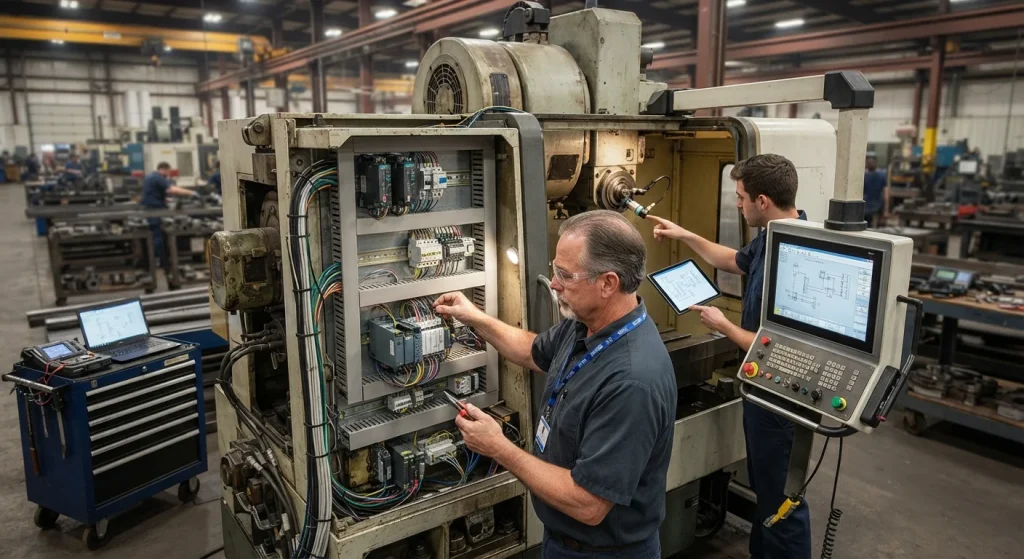
Reds Engineering provides industrial machinery retrofits in Melbourne using machining, fabrication, fitting and repair for existing production equipment.
Manufacturing growth does not always require a completely new production line. Industrial machinery retrofits can make sense when existing equipment remains useful but needs mechanical changes or replacement components to suit revised production requirements.
When Industrial Machinery Retrofits Suit Production Growth
A retrofit should start with the machine already on site. Its condition, original function, current limitations and proposed new duty all affect whether modification is practical.
At Reds Engineering, our general engineering services include manufacturing parts and prototypes, fabrication, maintenance, machinery assembly, installation and repair. We also design special-purpose machines and install and commission new production lines.
A retrofit may be worth assessing when:
- Product requirements have changed: Existing machinery may need different supports, guides, brackets or mechanical interfaces.
- Original parts are unavailable: Machined or fabricated replacement components may keep suitable older equipment serviceable when standard parts cannot be sourced.
- Repeated mechanical wear is occurring: A worn component may need closer assessment before another like-for-like replacement is made.
- The layout has changed: Equipment may need mechanical alterations, repositioning or supporting fabrication for a revised production arrangement.
- Expansion is planned: Reviewing existing equipment first can help determine what can reasonably be retained and what should be replaced.
Define the Mechanical Scope Before Modification
Industrial machinery retrofits should be based on the actual equipment needs, not an assumption that every issue requires automation. Before work begins, confirm drawings, existing modifications, loads, space, maintenance access and the intended production change. The scope should also define responsibility for controls, electrical work, guarding, testing and final acceptance.
Our production line installation guide explains why mechanical installation, electrical connection, controls integration and commissioning responsibilities should be separated clearly before shutdown work begins.
If the issue is an obsolete component rather than the wider machine, our reverse engineering legacy parts article covers replacement-part planning when original documentation or supply is limited.
Review Safety Duties When Existing Plant Is Altered
Changing machinery can introduce new hazards or affect existing risk controls. The WorkSafe Victoria Compliance Code: Plant states that plant alterations should consider information from the original designer or manufacturer and relevant technical standards. It also says altered plant should be inspected and tested before returning to service, with new risks controlled.
Retrofit planning should therefore address guarding, access, maintenance, operator interaction and testing alongside fabrication or machining. Some altered plant designs may also trigger registration requirements depending on the equipment and extent of the change.
Do Not Treat a Retrofit as a Guaranteed Capacity Upgrade
A retrofit can adapt suitable machinery, but it cannot guarantee higher throughput. Output still depends on the wider production process, including connected equipment, controls, material flow and the condition of the existing machine.
Reds Engineering can support mechanical modification through machining, fabrication, fitting, maintenance and equipment repair. Where a proposed change sits outside that scope, specialist responsibilities should be identified before work proceeds.
Explore Retrofit Options Before Replacing Your Equipment
Reds Engineering is based in Yarrambat, north-east of Melbourne, and supports manufacturing, food, packaging, aluminium, rail and general engineering applications.
If existing equipment no longer suits your production requirements, contact us with the machine details, drawings, current problem and proposed change. We can review the mechanical scope and discuss Industrial Machinery Retrofits that may suit the equipment before you commit to a wider replacement project.